Introduction to Literature for ESL Students
Are you a student who is frightened by the idea of reading literature in English? Do you find that a lot of books are just too difficult to understand? Is is difficult to find suitable literature for ESL students. Don’t worry, you’re not alone!
In this post, we’ll explore some tips and tricks for selecting appropriate literature for ESL students, so you can develop your language skills and gain confidence in your reading abilities. It takes time. But there’s no time like the present.
Complicated Literature Not Necessarily the Best
There’s a common misconception that the best way for ESL students to advance quickly in their English skills is by reading complex texts with long words. However, this is not necessarily the case. Good writing doesn’t rely on the length of the words used. Instead, it uses the best words for the context. As you will see, literature for ESL students doesn’t have to be complicated to be effective.
Selecting Suitable Literature for ESL Students
It’s important to select works that are suitable for your level and, just as importantly, ones that interest you. Indeed, there are many great classic works of literature suitable for ESL students. However, there is also excellent contemporary literature that may be easier to understand. Although, it may not seem like it, there is plenty reading material out there to help you develop your reading comprehension and language skills. And, at a pace that suits you!
ENJOYING THE CLASSICS
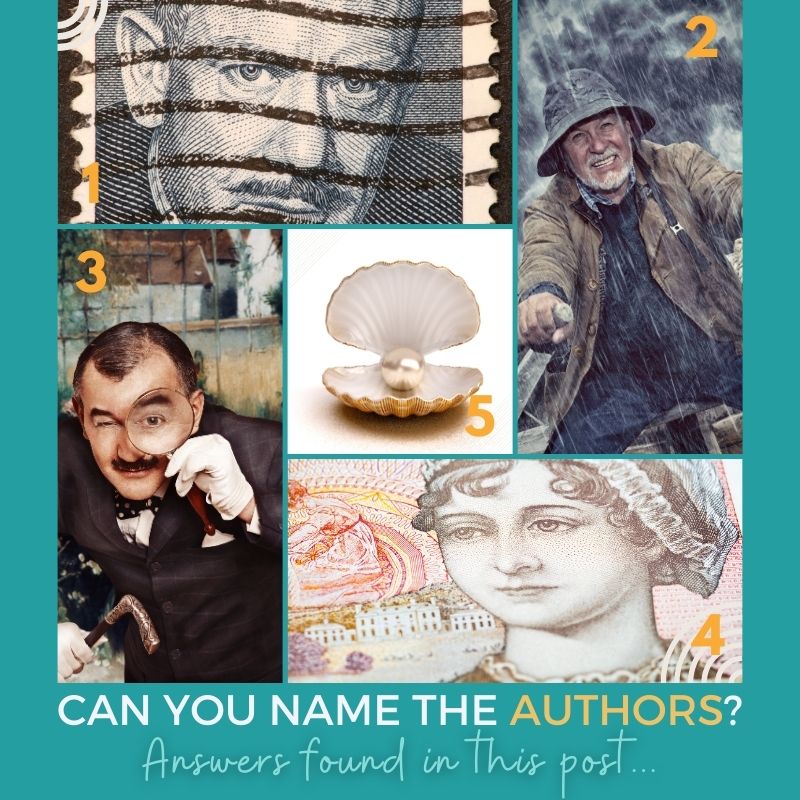
Jane Austen and Agatha Christie
There are many classic authors who write in a direct and understandable way, making their works perfect for literature for ESL students. As John Steinbeck once said, “If it is a good book, anyone will read it.”
Some of my personal favorites include Jane Austen and Agatha Christie, both British authors from different time periods. Despite Austen being born in the 18th century, she uses dialogue in a way that allows readers to quickly learn about the personality and feelings of her characters.
Agatha Christie’s work, especially her Hercule Poirot series, is a page-turner for anyone who loves whodunits. Her descriptions of places in Death on the Nile, for example, transport readers to Egypt:
“Silence fell on all three of them. They looked down to the shining black rocks in the Nile. There was something fantastic about them in the moonlight. They were like vast prehistoric monsters lying half out of the water.”
Steinbeck and Hemingway
Similarly, John Steinbeck‘s “The Pearl” and Ernest Hemingway‘s “The Old Man and the Sea” are examples of modern literature written in a straightforward style but still use rich imagery and expression to enhance their works.
From the latter example, a few sentences use simple words that tell us so much about the old man:
“The boy took the old army blanket off the bed and spread it over the back of the chair and over the old man’s shoulders. They were strange shoulders, still powerful although very old, and the neck was still strong too, and the creases did not show so much when the old man was asleep and his head fallen forward.”
F. Scott Fitzgerald and The Featured Image
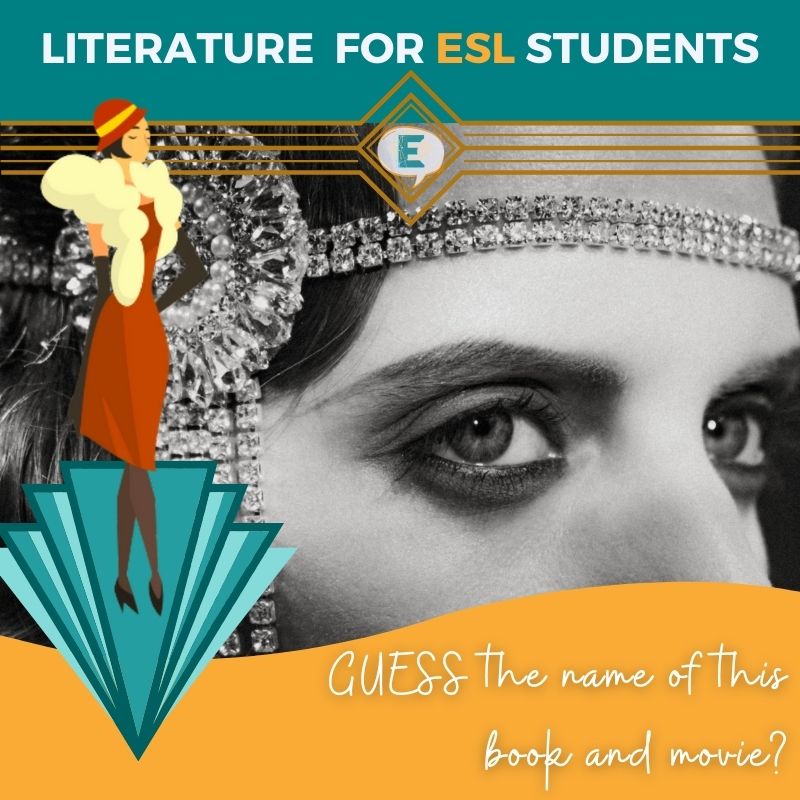
So, let’s go back to the post image where you were asked to guess the book which was made a couple of times into a movie. Did you get it? The Great Gatsby.
The author of this masterpiece, F. Scott Fitzgerald, was a contemporary of Steinbeck but a very different writer. While Steinbeck’s style is straightforward and direct, Fitzgerald’s writing is often poetic. He, as well as many of his characters, were obsessed with beauty. As one of the most famous novels in American literature, The Great Gatsby is full of vivid descriptions and before we know it, we are drawn into the age of the flappers. If you don’t know the meaning of the word “flapper”, check it out. There’s one on the left-hand side of the featured image above.
One such flapper was Great Gatsby’s “villain-heroine” Daisy Buchanan whose face was described as “sad and lovely with bright things in it, bright eyes and a bright passionate mouth”. Daisy was rich, privileged and life was one long party.
If you’re drawn to the partying and excesses of the 1920s, check out the movie “Midnight in Paris“. It’s a feel-good fantasy that sees the lead character—a screenwriter— transported back in time to the world of Fitzgerald and his contemporaries.
Can You Recommend Literature for Other ESL Students?
Haven’t read The Great Gatsby yet? Give it a go! It’s a great book for ESL learners as it is full of descriptive language that will help to improve language skills and reading comprehension.
And if you have any other suggestions for classic literature that would be good for ESL learners, please let us know in the comments below.